To those who study modern Korean history, I have originally written this short essay in criticism of those who seem to praise the days of president Park Chung-Hee and his rule. As numerous and significant as his achievements are which even today have the Koreans either divide or unify themselves depending on the individual’s judgement of his rule and legacy, with the aid of Providence, the people themselves had put an end to his unconstitutional rule that went against all the intents and purposes of the republic in the hopes of restoring democracy which they successfully do so. In writing the essay, neither could I have diminished or ignored his achievements as so influential that it is not possible to understand this country’s history and the current state of national politics and society without him. In conclusion, I must maintain that his praiseworthy achievements should be celebrated recognizing the immense national power he had secured for the country and its future generations considering the difficult geopolitical circumstances of the time with such few resources available to him. However as citizens of a free country today, we the people not only should keep a watchful eye for such leaders and their intent as not to repeat history of dictatorship in times of peace and prosperity but be willing to carry out responsibilities and duties of free citizens of such a republic to the best of our judgement and ability in good faith.
During the late Joseon period, Korea became known to the Western world through Corea, the Hermit Nation, written by the American author William Elliot Griffis, in which Korea was described as “The Land of the Morning Calm.” Perhaps he used this expression simply because Joseon reminded him of a beautiful and peaceful morning. However, Joseon may indeed have been a quiet country in the sense that it was governed by an autocratic monarch and constrained by a rigid social hierarchy based on Neo-Confucianism. For example, Joseon controlled people’s residence and movement through the hopae identification system. Furthermore, in the late Joseon period, Park Se-dang was even ordered into exile because his interpretation of the Confucian classics differed from that of orthodox Neo-Confucian scholars. These examples suggest that not only religious freedom but also intellectual freedom was restricted in Joseon. In this respect, Joseon may have been a country that could hardly have been anything other than quiet.
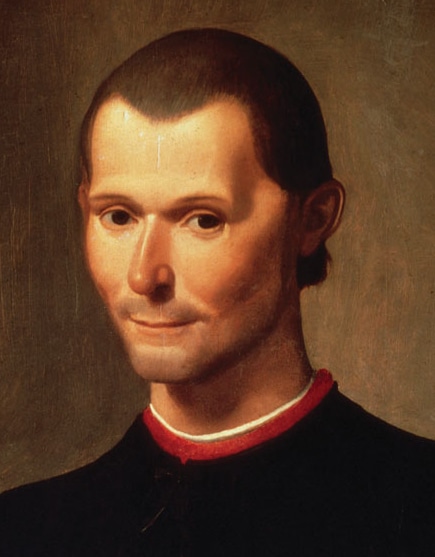
What, by contrast, was the Roman Republic like? According to Machiavelli’s Discourses on Livy, Roman society was constantly in turmoil because of conflicts between social classes. Plebeians and patricians shouted at one another in political assemblies, while the plebeians organised demonstrations and even riots. As a result, merchants sometimes had to suspend their businesses and close their shops. This brings to mind the Black Lives Matter protests that took place across the United States several years ago. It also reminds me of South Korean labour unions, which sometimes negotiate with companies, sometimes take to the streets to demonstrate, and at times resort to violence.
Looking at a country that seemed so disorderly, with unrest continuing day after day, many Romans believed that Rome would have disappeared in an instant had it not been for the republic’s good laws and a formidable army. Surprisingly, however, Machiavelli argues that laws and institutions designed to protect Roman liberty emerged from the persistent disturbances and conflicts that took place throughout Roman society.
Unlike Joseon, the Republic of Korea today resembles the Roman Republic in that it is a country that never seems to be quiet, even for a moment. Conflict and disagreement are commonplace in every sphere of society, including politics, academia, the workplace, labour relations, and even family life. Furthermore, under the republican principle of the separation of powers, disagreements and conflicts also arise between government institutions. In authoritarian systems, such conflicts and differences of opinion are suppressed or ignored. In South Korea, however, the gap between opposing views can gradually be narrowed and ultimately resolved through democratic procedures within institutions such as the legislature and the judiciary.
In this respect, South Korea bears a much greater resemblance to Rome than to Joseon. The industrialisation achieved by South Korea after the Korean War, and its rise to become a commercial power, can be described negatively as the result of dictatorial leadership or positively by the achievement of authoritarian leadership. As South Koreans became more prosperous, beginning in the 1980s, they started expressing their desire for freedom not only in the economic sphere but also in areas of political and social life. Resistance to dictatorship, exemplified by the May 18 Democratization Movement, formed part of the struggle that eventually led to today’s parliamentary democracy. Through this process, the Korean people can be said to have reclaimed for themselves the fundamental principles of a republic that protects civil rights and individual liberty, originally established when President Syngman Rhee proclaimed the founding of the Republic of Korea in 1948. These principles were restored through measures such as direct presidential elections, a single five-year presidential term, the establishment of the Constitutional Court, and the repeal of the Basic Press Act.
Milton Friedman argues that no other kind of freedom can exist without economic freedom. Park Chung-hee, who is commonly described as a dictator, disregarded the laws and principles of a republic. Nevertheless, we cannot overlook the fact that successful industrialisation led to the emergence and growth of major corporations that even the United States and Japan might envy. These corporations contributed not only the nation’s wealth but also its diplomatic influence. As the people became more prosperous, they began to awaken to the importance of intellectual and political freedom and to pursue self-fulfilment. Ironically, however, the obstacle in their path was Park Chung-hee himself and the government he led. Ultimately, the Koreans restore democracy by putting an end to dictators’ attempts to extend their rule marking the end of dictatorship. Furthermore, it cannot be denied that Syngman Rhee laid the foundations that enabled the people who demanded democracy in the 1980s to restore its original republican design, by establishing from the outset a state founded on the principle of protecting individual liberty. This part of history remains a contentious issue in South Korea today, and it seems likely to continue to be debated in the future.
Therefore, within this ironic history of humanity, which unfolds in the hands of the Creator, we who live today as free citizens should fiercely criticise the authoritarian conduct and legislation of our present and past leaders. More importantly in the case of past leaders and their legacies, should we not also consider the domestic and international political circumstances in which they found themselves? And should we not exercise some restraint in the audacity of claiming, in the face of history as it has already unfolded, that we ourselves would have acted differently?
That the Dissensions Between the Senate and Commons of Rome, Made Rome Free and Powerful
Touching those tumults which prevailed in Rome from the extinction of the Tarquins to the creation of the tribunes the discussion of which I have no wish to avoid, and as to certain other matters of a like nature, I desire to say something in opposition to the opinion of many who assert that Rome was a turbulent city, and had fallen into utter disorder, that had not her good fortune and military prowess made amends for other defects, she would have been inferior to every other republic. I cannot indeed deny that the good fortune and the armies of Rome were the causes of her empire; yet it certainly seems to me that those holding this opinion fail to perceive, that in a State where there are good soldiers there must be good order, and, generally speaking, good fortune. And looking to the other circumstances of this city, I affirm that those who condemn these dissensions between the nobles and the commons, condemn what was the prime cause of Rome becoming free; and give more heed to the tumult and uproar wherewith these dissensions were attended, than to the good results which followed from them; not reflecting that while in every republic there are two conflicting factions, that of the people and that of the nobles, it is in this conflict that all laws favourable to freedom have their origin, as may readily be seen to have been the case in Rome. For from the time of the Tarquins to that of the Gracchi, a period of over three hundred years, the tumults in Rome seldom gave occasion to punishment by exile, and very seldom to bloodshed. So that we cannot truly declare those tumults to have been disastrous, or that republic to have been disorderly, which during all that time, on account of her internal broils, banished no more than eight or ten of her citizens, put very few to death, and rarely inflicted money penalties. Nor can we reasonably pronounce that city ill–governed wherein we find so many instances of virtue; for virtuous actions have their origin in right training, right training in wise laws, and wise laws in these very tumults which many would thoughtlessly condemn. For he who looks well to the results of these tumults will find that they did not lead to banishments, nor to violence hurtful to the common good, but to laws and ordinances beneficial to the public liberty. And should any object that the behaviour of the Romans was extravagant and outrageous; that for the assembled people to be heard shouting against the senate, the senate against the people; for the whole commons to be seen rushing wildly through the streets, closing their shops, and quitting the town, were things which might well affright him even who only reads of them; it may be answered, that the inhabitants of all cities, more especially of cities which seek to make use of the people in matters of importance, have their own ways of giving expression to their wishes; among which the city of Rome had the custom, that when its people sought to have a law passed they followed one or another of those courses mentioned above, or else refused to be enrolled as soldiers when, to pacify them, something of their demands had to be conceded. But the demands of a free people are hurtful to freedom, since they originate either in being oppressed, or in the fear that they are about to be so. When this fear is groundless, it finds its remedy in public meetings, wherein some worthy person may come forward and show the people by argument that they are deceiving themselves. For though they be ignorant, the people are not therefore, as Cicero says, incapable of being taught the truth, but are readily convinced when it is told them by one in whose honesty they can trust. We should, therefore, be careful how we censure the government of Rome, and should reflect that all the great results effected by that republic, could not have come about without good cause. And if the popular tumults led the creation of the tribunes, they merit all praise; since these magistrates not only gave its due influence to the popular voice in the government, but also acted as the guardians of Roman freedom, as shall be clearly shown in the following Chapter.
From the discourses (CHAPTER IV) by Niccolo Machiavelli